Overview
Replacing One Missing Tooth
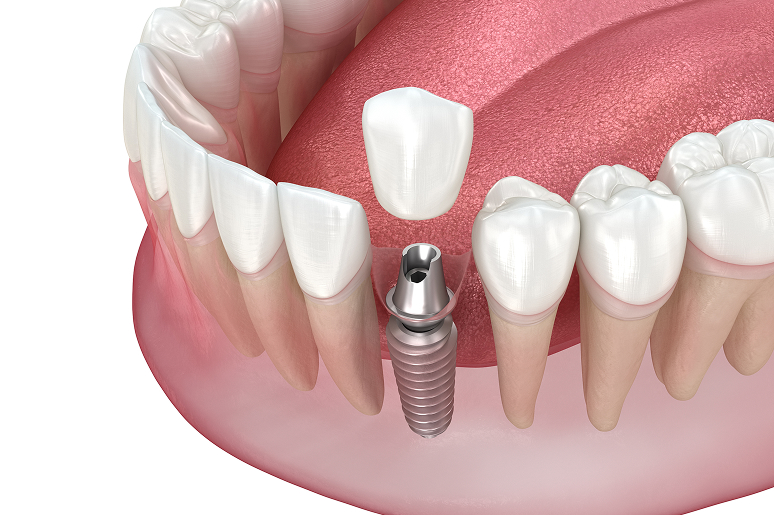
A single tooth dental implant is the gold standard for replacing an individual missing tooth. Unlike a traditional bridge — which requires grinding down the adjacent healthy teeth for support — a single implant stands entirely on its own, preserving the surrounding teeth completely.
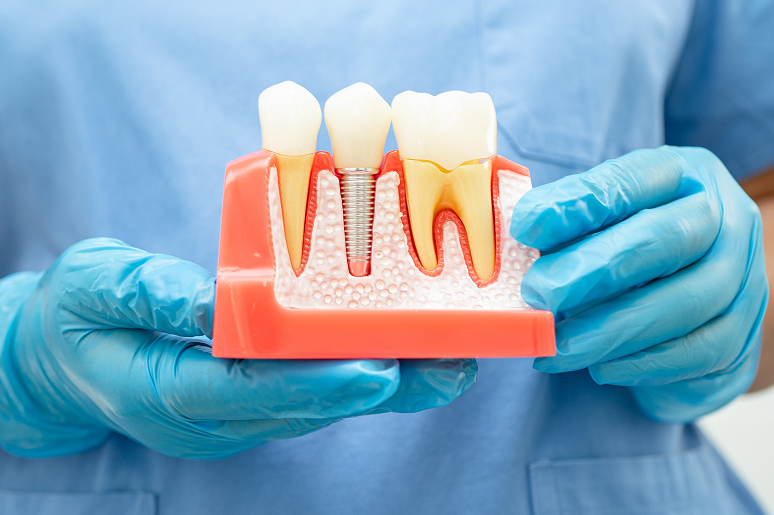
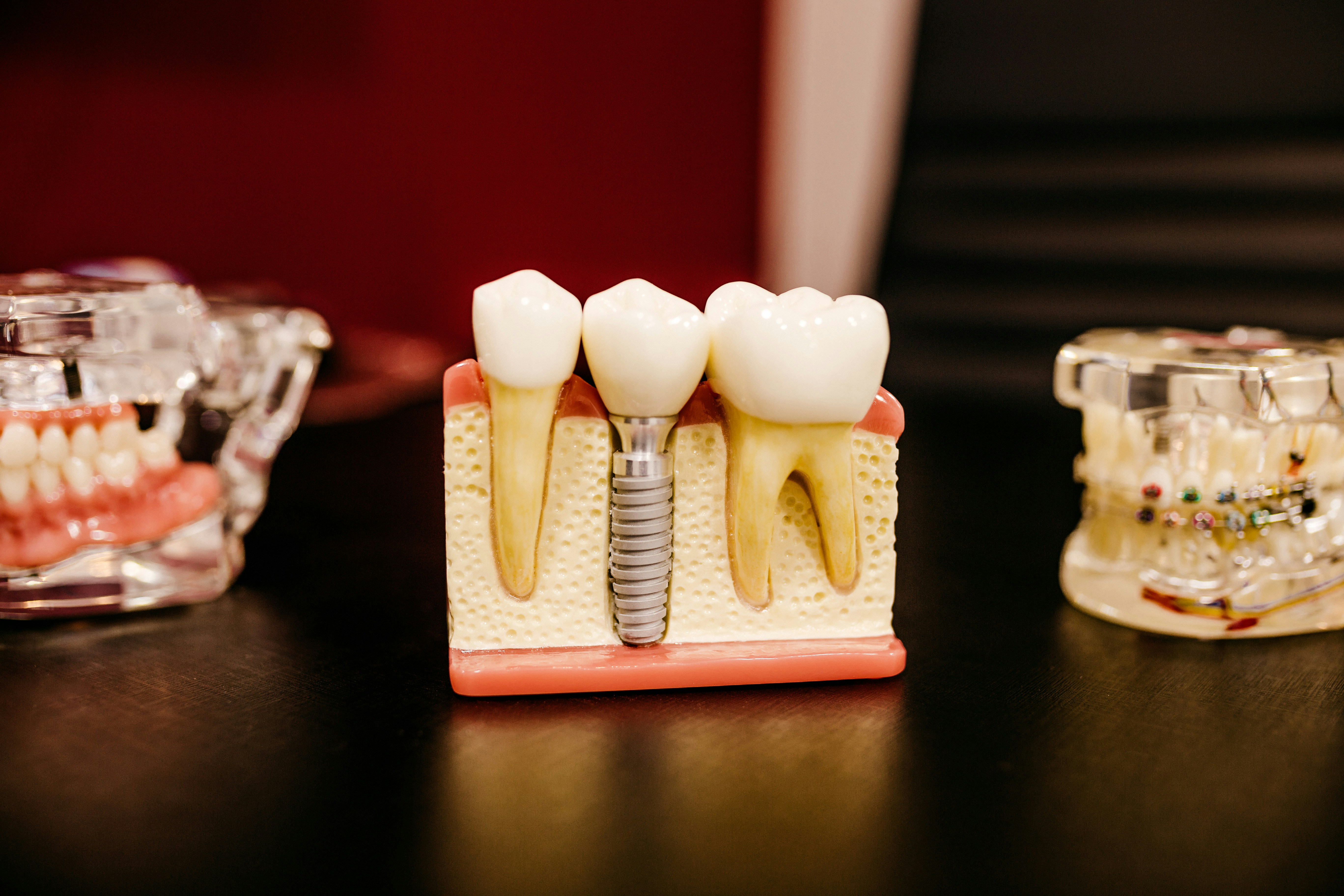
The implant itself is a small titanium post that is placed directly into the jawbone where your tooth root once was. Over several months, the titanium bonds with the bone through a natural process called osseointegration, creating an incredibly strong and stable anchor. A custom porcelain crown is then attached, completing the restoration with a result that is virtually indistinguishable from a natural tooth.
Why Not a Bridge?
Traditional dental bridges involve permanently altering healthy adjacent teeth. A single implant protects those neighboring teeth, maintains the natural spacing of your bite, and prevents the bone loss that occurs when a tooth root is absent.
No healthy neighboring teeth are altered or reduced. The implant is entirely self-supporting, just like a natural tooth root.
The implant post stimulates the jawbone just as a natural root does, preventing the bone resorption that leads to facial collapse over time.
Your custom crown is shade-matched and shaped to blend seamlessly with your surrounding teeth — no one will know it is not natural.
The Procedure
Step-by-Step: What to Expect
The single tooth implant process typically unfolds over several months and involves three key stages. First, during a brief surgical appointment, Dr. Hoover places the titanium implant post into the jawbone under local anesthesia or IV sedation. Most patients find this more comfortable than they anticipated and return to normal activities within a day or two.
Over the next three to six months, the implant fuses with the surrounding bone — a process that ensures the permanence of your restoration. During this healing phase, a temporary crown may be placed to maintain aesthetics and function.
Once osseointegration is confirmed, an abutment is attached to the implant, and your restorative dentist places the final custom crown. From this point forward, you care for the implant exactly as you would a natural tooth: brushing, flossing, and regular dental cleanings.
Candidacy
Are You a Candidate?
Most adults who are missing a single tooth and have sufficient jawbone density are excellent candidates for a single tooth implant. Ideal candidates are in good general health, have healthy gum tissue, and do not smoke — or are willing to stop smoking before and during the healing process.
If you have experienced bone loss at the site of the missing tooth, a bone graft may be recommended prior to implant placement to ensure adequate support. Dr. Hoover will evaluate your situation with X-rays and a thorough clinical examination at your consultation.
From the initial implant placement to the final crown, the process typically takes three to eight months, depending on your healing rate. The surgery itself is a brief outpatient procedure.
The procedure is performed with anesthesia, so you will feel little to no discomfort during surgery. Post-operative soreness is typically mild and well managed with over-the-counter pain relievers.
With proper care, the implant post can last a lifetime. The crown may need replacement after 10–15 years due to normal wear, but the underlying implant remains in place indefinitely.